First Swim of the Year: Hardy Swimmers' Guide to April & Early May Cold-Water Spots
Where to take the first swim of 2026 in New England. Cold-water and cold-plunge spots for April and early May, with honest temperature ranges and safety guidance.
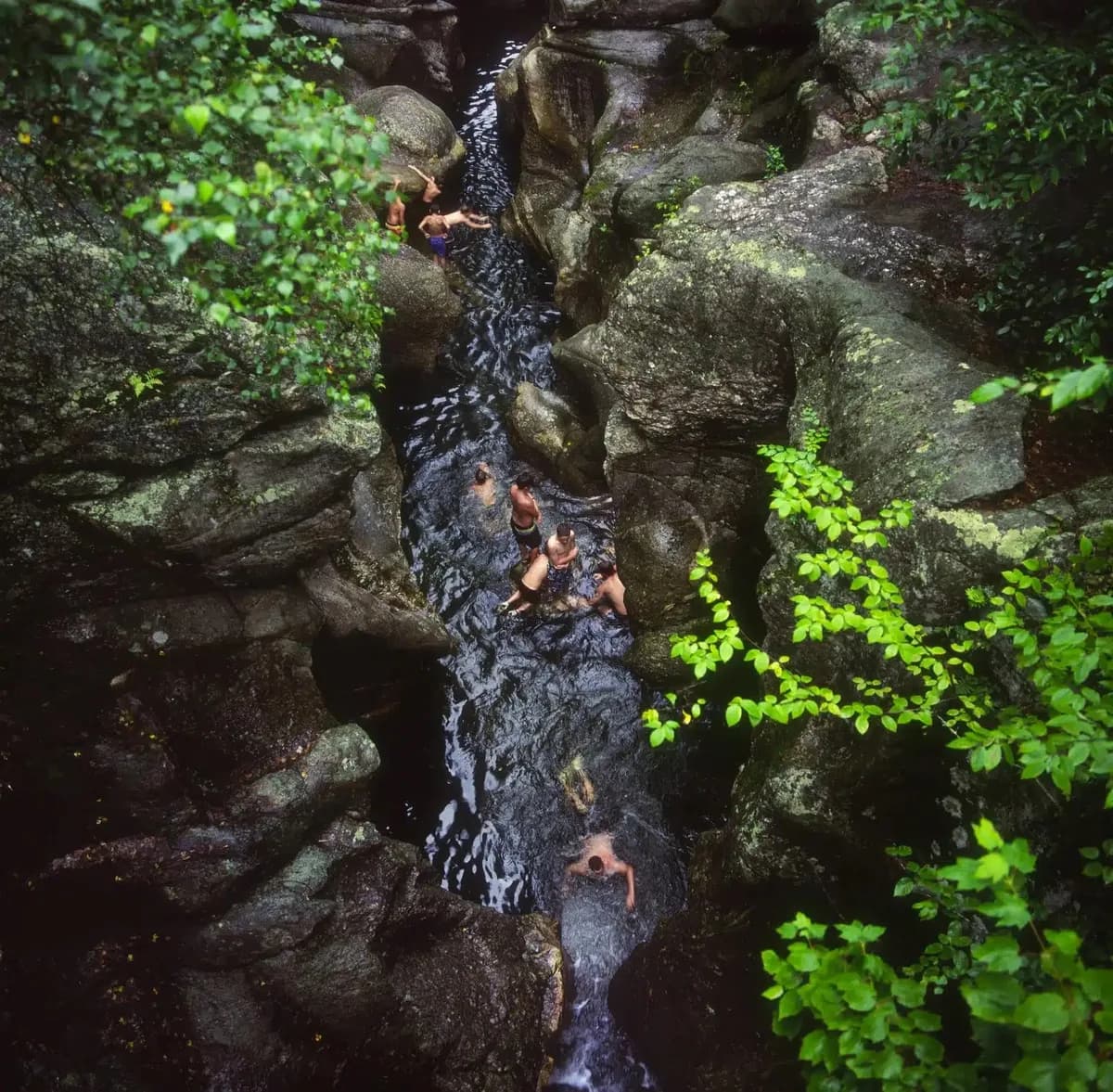
Map of the picks
A real guide to taking the first swim of 2026 in New England. Cold-water and cold-plunge spots for April and early May, with honest temperature ranges, safety context, and the spots where a cold-water swim culture already exists.
Cold-water swimming is having a moment in New England. Dorset Quarry has locals doing daily plunges through April. Red Rocks Park sees dawn swimmers year-round. The Northeast Kingdom Winter Swim Society runs events in January. This isn't fringe anymore — it's a real community, and April is when the first-swim crowd doubles.
The spots below are sorted by water temperature and by the kind of swimmer they suit. A quick dip at a sunny pond is one thing. A plunge at Bingham Falls in 42°F water is something else entirely. Know which one you are signing up for before you leave home.
Start with the New England Swimming Holes map. For state-level planning, use Vermont swimming holes, New Hampshire swimming holes, Maine swimming holes, Massachusetts swimming holes, Connecticut swimming holes, or the Rhode Island hub.
Quick answer
| April 2026 | Temp range | Swim type |
|---|---|---|
| Southern ponds (lowland) | 48–58°F | Short swim possible with prep |
| Southern rivers | 45–52°F | Cold plunge only |
| Mountain pools | 38–46°F | Expert plunge only |
| Lake Champlain shore | 38–45°F | Plunge, traditional scene |
| Big lakes (Sebago, Champlain, Memphremagog) | 40–48°F | Plunge or wetsuit swim |
Safety note
This guide does not make a cold-water swim safe or legal today. Check posted signs, current, ice, water quality, and weather before entering. Never swim alone, and talk with a medical professional first if you have heart, breathing, seizure, or circulation concerns.
The 12 first-swim-of-the-year picks
1. Dorset Quarry — Dorset, Vermont
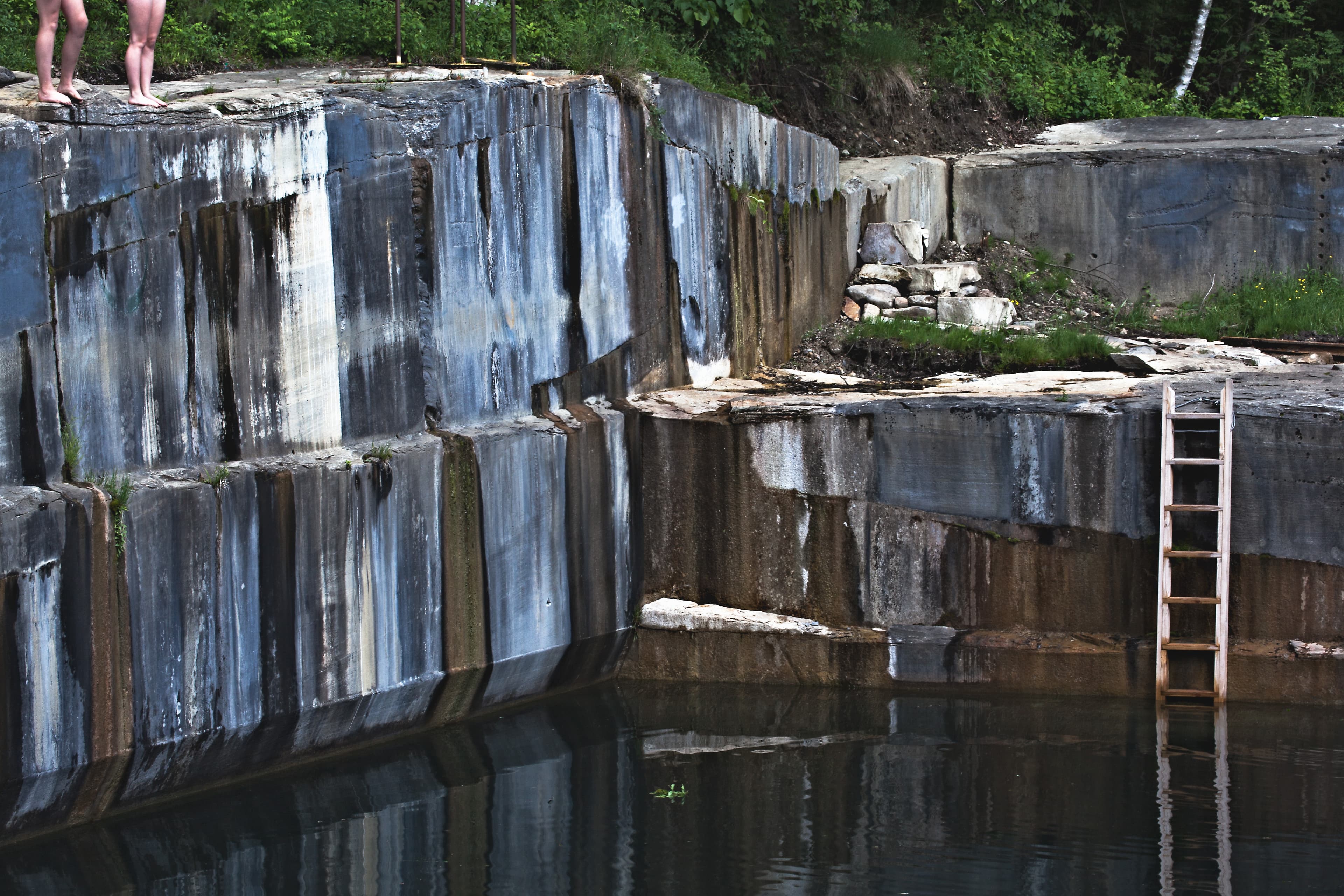
The earliest reliable Vermont swim. Local cold-water swimmers are in the water by mid-April most years. 45–52°F in April, 55–62°F in mid-May. Shallow edges make for easy in-and-out. Deep center for the longer swims. Open the Dorset Quarry guide.
2. Walden Pond — Concord, Massachusetts
Open year-round for swimming. No lifeguards outside the Memorial Day to Labor Day window but swimming is permitted when posted conditions allow. 48–58°F in April. Bathhouse is closed off-season, so plan accordingly. Open the Walden Pond guide.
3. Puffer's Pond — Amherst, Massachusetts
Low-elevation shallow pond. One of the first Pioneer Valley ponds to cross 55°F. April range 48–56°F. Open the Puffer's Pond guide.
4. Watchaug Pond — Charlestown, Rhode Island
Burlingame State Park. Southern New England lowland with direct sun exposure. April 50–58°F. Closed to managed use until Memorial Day but shore access is available. Open the Watchaug Pond guide.
5. Red Rocks — South Burlington, Vermont
The Burlington cold-plunge culture hub. Lake Champlain shoreline in Red Rocks Park. Active year-round swim community. April water: 38–45°F. This is a plunge, not a swim. Open the Red Rocks guide.
6. Lareau Swim Hole — Waitsfield, Vermont
Mad River pool. April water 45–52°F with still-noticeable spring current. Not a swim-long pool in April; a dip, a scream, and back out. Open the Lareau Swim Hole guide.
7. Bingham Falls — Stowe, Vermont
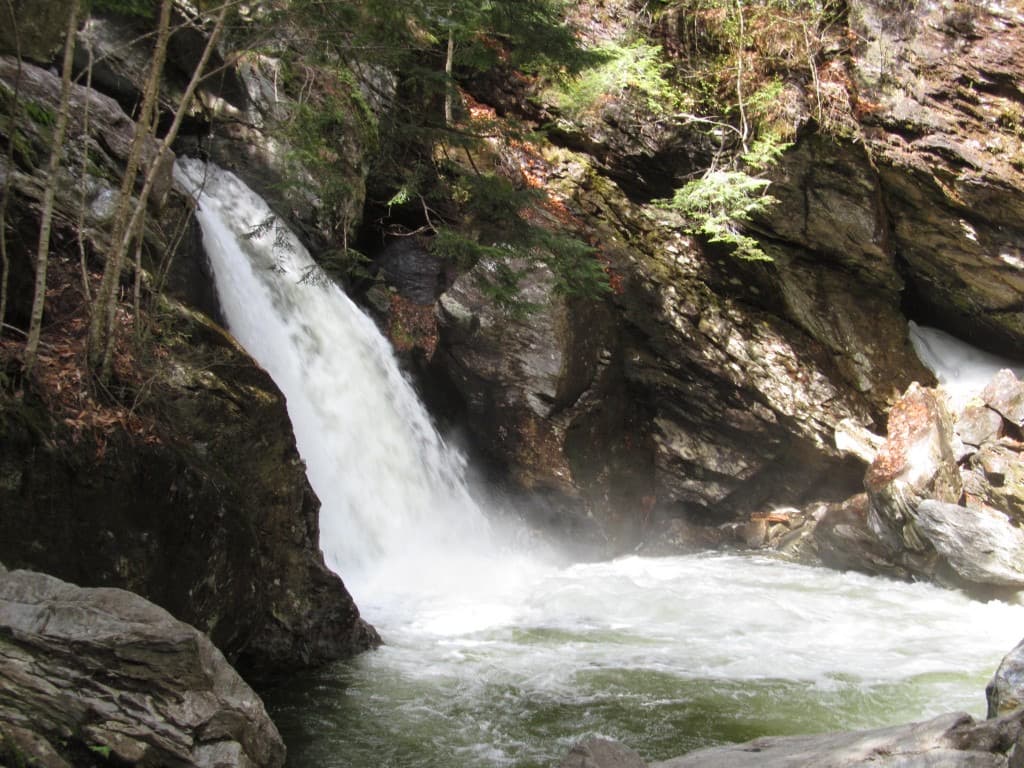
A serious Vermont gorge plunge, not a casual first-swim stop. Water can stay 38–45°F through May, and slick rocks, steep access, and strong current make mistakes costly. Most visitors should treat it as a look-only spring stop. Open the Bingham Falls guide.
8. Emerald Pool — Chatham, New Hampshire
Evans Notch cold holdout. 38–45°F in April. Trail access means less random traffic and more committed plungers only. Open the Emerald Pool guide.
9. Echo Lake Beach (Franconia Notch) — Franconia, New Hampshire
State park lake at Franconia Notch. Traditional ice-out plunge spot. Check ice conditions; most years ice is gone by mid-April. Open the Echo Lake Beach guide.
10. Sand Beach — Acadia National Park, Maine
Saltwater, not freshwater, but worth including for context. Acadia's Sand Beach has a year-round cold-plunge culture. April water temp in the low 40s. Open the Sand Beach guide.
11. Lake Waramaug — Kent, Connecticut
Litchfield Hills lowland lake. April water 46–54°F. State park beach closed until Memorial Day but shoreline access is available. Open the Lake Waramaug guide.
12. Bash Bish Pool — Mount Washington, Massachusetts
Orientation only. Swimming is not permitted at Bash Bish Falls at any time. Included here for context because a lot of early-season searchers find this spot. Visit for the spring-flow photography, don't swim. Open the Bash Bish Falls guide.
What cold-water swimming is
Three distinct practices that get grouped together:
- Cold plunge: short immersion, typically under two minutes, often after a sauna or workout. Focus on the acute response. Temperature under 60°F.
- Ice bath: stationary immersion in very cold water, typically 35–50°F, for fixed durations (1–5 minutes). Therapeutic tradition.
- Cold open-water swim: actual swimming in water under 60°F for 10–60 minutes, often with wetsuits. Competitive and recreational communities.
First-swim-of-the-year crowd is mostly categories 1 and 3. Pick the right spot for your category.
Cold-water safety basics
- Never swim alone. A safety observer on shore is standard practice.
- Cold shock response is involuntary gasping and rapid breathing in the first 60 seconds. Get your head submerged last, not first.
- After-drop is when your core temperature continues dropping 15–30 minutes after you exit. Warm layers, hot drink, move around.
- Know when to exit. Cold-water swimming requires you to exit before you want to. By the time you feel tired, you're already in trouble.
- Numbness, clumsiness, slurred speech, confusion, or unusual fatigue are exit-now signals. Do not wait to see if they pass.
- Keep first exposures short. Start with seconds or a very brief dip, not a goal time. Trained cold-water swimmers use their own protocols, safety partners, and gear.
Gear for April cold swimming
- Bright swim cap (safety, warmth)
- Neoprene booties (rocky bottom, cold feet)
- Neoprene gloves (hands numb fast)
- Tow float with waterproof pouch
- Changing robe or parka for before and after
- Hot drink in a thermos
- Dry layers and a hat
A wetsuit is optional for short plunges but useful for actual swimming.
A simple first-swim planning order
- Check your experience level honestly.
- Pick a spot that matches it. Dorset Quarry for beginners, Bingham Falls for experts.
- Go with someone experienced. Never alone.
- Check water temp the day of.
- Warm layers and hot drink in the car before you walk to water.
- Keep the first immersion very short. Exit before you feel tired or clumsy.
- Warm up gradually afterward with dry layers, shelter from wind, and a warm drink.
Before you go
- Cold water in April is not like cold water in August. Spring runoff adds current.
- Your swim skills degrade in cold water fast. Strong swimmers drown in cold water more often than weak ones in warm water.
- Alcohol and cold water is lethal. No exceptions.
- If you have heart conditions, ask a doctor. Cold shock is an acute cardiac stressor.
- If it's your first time ever, find a local cold-water swim group. They exist in Burlington, Portland, Greater Boston, and Providence.
Related guides
- When New England Swimming Holes Warm Up (timeline overview)
- Water Temperature Week by Week
- Best New England Lakes and Quarry Swims
FAQ
Is April swimming safe in New England?
April swimming carries real risk. Water temperatures are often 40–55°F, and cold shock can affect even strong swimmers. If you are not acclimated, choose a shallow pond or managed access point, go with an experienced group, keep the first exposure very short, and avoid fast-moving rivers.
What is cold-water swimming?
Recreational swimming or short immersion in water below 60°F. It can include cold plunges, ice baths, and longer open-water cold swims by trained people. Benefits are personal and should not be treated as medical advice. Risks include cold shock, hypothermia, after-drop, and cardiac stress.
Where do Vermonters cold-plunge?
Red Rocks Park (Burlington), Dorset Quarry, Lake Willoughby (ice-out), Lake Memphremagog, and Lareau Swim Hole are all part of active Vermont cold-water swim communities. The Northeast Kingdom Winter Swim Society organizes documented winter events.
When does Lake Champlain usually thaw?
Lake Champlain typically has ice-out by late March to early April in the southern and central sections; the northern end can hold ice into mid-April in colder years. Even after visible ice is gone, shoreline water can still be in the 38–45°F range.
Can I swim at Walden Pond in April?
Yes. Walden Pond is open year-round for swimming, though without lifeguards outside Memorial Day to Labor Day. April temperatures run 48–58°F, with 50°F being typical in mid-month. Dogs are not allowed at any time of year.
What gear do I need for cold water swimming?
A bright swim cap, neoprene booties, neoprene gloves, and a tow float. A changing robe or parka for before and after. Warm layers and a thermos of hot drink for after. Never swim cold water alone. A safety observer on shore is standard practice.
View the next guide
- ← Previous: Swimming Holes With Restrooms and Amenities
- Next: Swimming Holes on the Appalachian Trail & Long Trail →
Updated June 1, 2026. Cold-water swimming carries real risks. Never swim alone, and consult a medical professional first if you have cardiovascular, breathing, seizure, or circulation concerns.