When New England Swimming Holes Actually Warm Up (2026 Water Temperature Timeline)
See when New England ponds, rivers, quarries, and mountain pools usually warm up in 2026, with early-season picks, cold-water notes, and timing by month.
Map of the picks
The short answer: not when you think. Air temperature in the 80s in early May does not mean the water is swimmable. New England's freshwater runs 15 to 25 degrees behind the air for most of the spring, and the mountain rivers run colder and longer than anyone expects.
If you're trying to time your first real swim, this is the calendar to use. It lays out when different kinds of spots warm up in 2026, plus the places that turn swimmable first.
These are planning ranges, not live readings. Water can run warmer or colder after rain, dam releases, cold nights, heat waves, algae closures, or a late snowpack. Check a recent gauge, park notice, or dated local report before you drive.
Quick answer: the swimmable-water calendar
| When | What's swimmable |
|---|---|
| Late April | Basically nothing. Ponds in the 50s, rivers in the 40s. Hardy cold-plunge only. |
| First week of May | Shallow southern New England ponds start pushing 60°F on warm days. |
| Mid-May | Lowland CT/RI/MA ponds consistently 62–66°F. First real swims for most people. |
| Memorial Day weekend | Southern ponds 65–70°F. Southern VT rivers ~60°F. Mountain spots still cold. |
| First week of June | Most southern NE swimmable. Southern VT and southern NH rivers cross 65°F. |
| Mid-June | Mid-Vermont and mid-New Hampshire rivers start to feel good for real swims. |
| Late June | Northern VT, White Mountains, western ME hit normal swim temps. |
| July | Peak. Even cold gorges warm to bearable levels in shallow pools. |
| Labor Day | Water temps hold. Air cools but ponds stay warm through mid-September. |
The 10 spots that warm up first in 2026
The map at the top tracks all ten picks below. Tap any pin if you want the full page for that spot.
These are ordered roughly by how early in the season they become swimmable. Every spot on the list is a lowland pond, shallow lake, or southern river pool — the three categories that shed winter fastest.
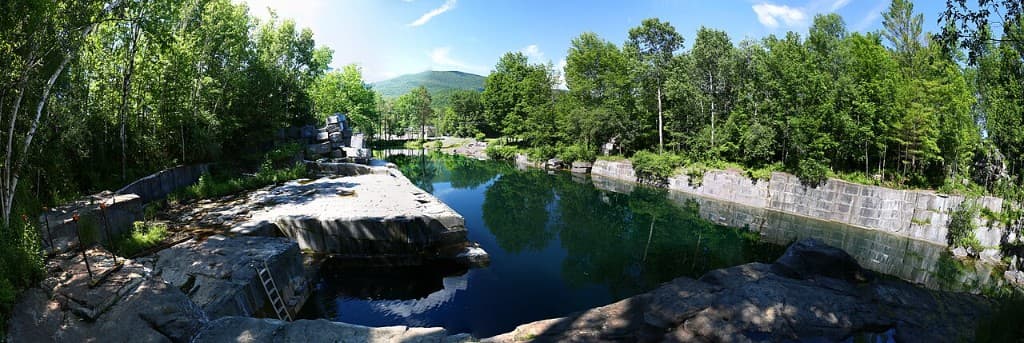
1. Dorset Quarry (Dorset, Vermont)
A flooded marble quarry sitting in an open south-facing bowl. Shallow shelves around the edges warm before any other Vermont swim hole, often swimmable by the second week of May. Water gets clearer and colder as you move toward the middle.
2. Walden Pond (Concord, Massachusetts)
Low elevation, sheltered, reliably swimmable by mid-May. The state park manages the beach and posts water temperature regularly during the season. Lifeguards start Memorial Day weekend.
3. Puffer's Pond (Amherst, Massachusetts)
The shallow North Pond hits 68°F weeks before most of the Pioneer Valley. Popular with UMass students, which tells you something about its reliability as an early swim.
4. Wallum Lake (Burrillville, Rhode Island)
Sandy shallows along the George Washington Campground side of the lake warm earlier than the deep basin. Typically swimmable the second week of May.
5. Watchaug Pond (Charlestown, Rhode Island)
Burlingame State Park's beach. South County lowland, direct sun exposure, reliably 65°F+ by Mother's Day weekend in most years.
6. Burr Pond (Torrington, Connecticut)
A 96-acre pond that warms faster than any of the Farmington River stretches. The state park beach opens Memorial Day weekend with lifeguards.
7. Squantz Pond (New Fairfield, Connecticut)
Part of the Candlewood system. The sheltered state park arm warms earlier than the main lake. Good early-season family pick.
8. Salmon Hole (West River, Vermont)
A river pool in southern Vermont that lags the ponds by about two weeks but still warms ahead of any pool north of Route 4. Usable by the first week of June in most years.
9. Lake Waramaug (Kent, Connecticut)
The state park beach end warms before the rest of the lake because of shelter and shallow sandy bottom. Early June swimming is routine.
10. Lincoln Woods State Park Pond (Lincoln, Rhode Island)
Managed beach with lifeguards from Memorial Day through Labor Day. One of the earliest reliably staffed options in the region.
How water temperature works in New England
Three things control when a swim spot becomes swimmable:
Depth. Shallow water heats and cools fast. A three-foot pond can gain 5°F in a sunny afternoon. A twenty-foot pool in a gorge holds its winter temperature into July.
Flow. Standing water warms. Moving water resists. A big river like the Connecticut or the Deerfield feeds itself cold mountain water constantly, so pool temperatures lag the air by a full month even in heat waves.
Sun exposure. A south-facing pond with no tree cover will hit 70°F three weeks before a forested gorge at the same elevation. Shade is the single biggest factor people underestimate.
All three combine in obvious ways. Lowland ponds with open exposure warm fastest. High-elevation shaded gorges warm last, if they warm at all.
Month-by-month water temperature ranges (2026)
These numbers are typical planning ranges based on water type, elevation, shade, and seasonal timing. Specific spots can run warmer or cooler depending on the variables above. Check USGS or recent reports before you drive.
April (22–74°F air range)
- Southern ponds: 48–58°F
- Southern rivers: 45–52°F
- Mountain rivers: 38–45°F
- Gorges and notches: 36–42°F
This is still cold-plunge territory, not casual swimming. If you are not used to cold water, April is when mistakes get serious fast.
May (weeks 1–2)
- Southern ponds: 55–64°F
- Southern rivers: 50–58°F
- Mountain rivers: 45–52°F
- Gorges: 42–48°F
The first southern pond swims happen this window. Most people will still find it too cold.
May (weeks 3–4) + Memorial Day weekend
- Southern ponds: 63–70°F
- Southern rivers: 58–65°F
- Mid-state rivers (mid-VT, mid-NH): 55–62°F
- Mountain rivers: 50–58°F
- Gorges: 48–55°F
Mainstream swim season opens in southern New England. Northern New England is still too cold for most.
Early to mid-June
- All southern NE swimmable
- Southern VT / southern NH: swimmable
- Mountain rivers: starting to be swimmable in pools
- Gorges: still cold, use for short dips
Late June through August
- Most established swim spots are in their normal season
- Peak water temps mid-July through mid-August
- Shaded gorges, dam-release rivers, algae-prone beaches, and high-water days can still be poor choices
September
- Water temps hold 5–10°F behind air temps
- Ponds stay swimmable through mid-September most years
- Rivers cool faster
- Last truly warm weekend is usually the second weekend of September
Spots that stay cold all summer
Not every place warms up. These are the ones you visit for the scenery and a quick dip, not a lazy hour in the water:
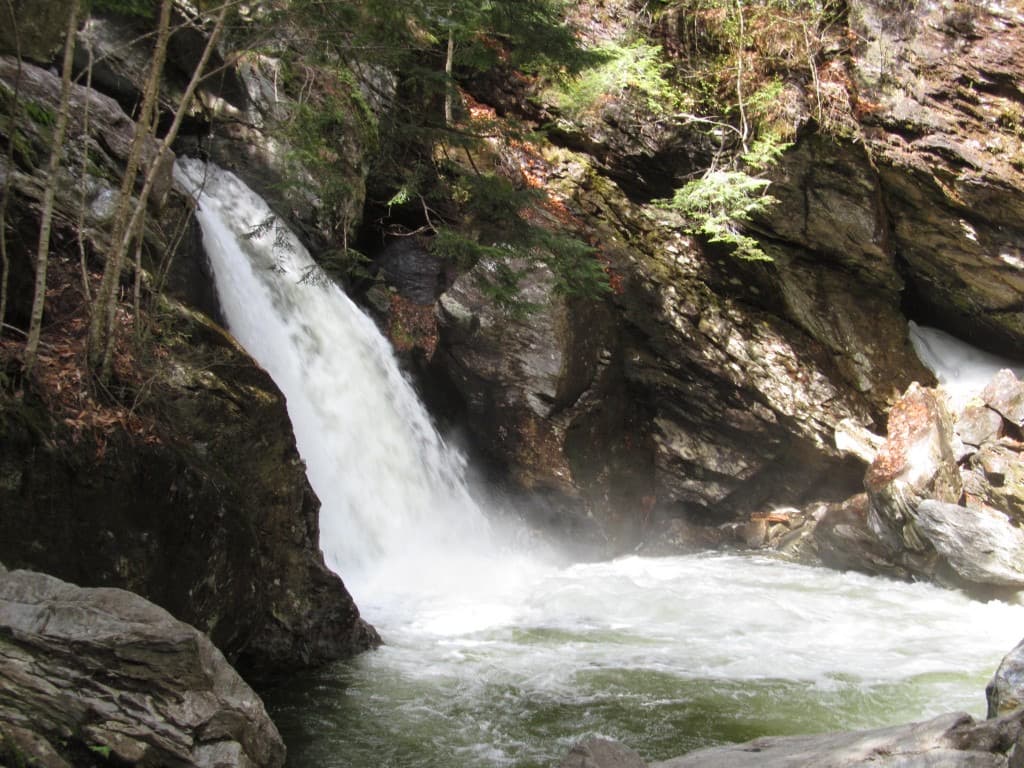
- Bingham Falls (Stowe, Vermont) — gorge-fed, never above 60°F
- Franconia Falls (Lincoln, New Hampshire) — high-elevation runoff, typically 52–58°F all summer
- Gulf Hagas / Screw Auger Falls (Maine) — slate gorge, never warm
- The Basin (Franconia Notch, NH) — mountain water, always cold
- Emerald Pool (Chatham, NH) — shaded gorge
- Arethusa Falls (Harts Location, NH) — too cold to swim in most summers
If you're chasing warm water in August, stay out of the notches.
How to check water temperature before you go
USGS real-time data: waterdata.usgs.gov — many New England rivers have active temperature gauges. Free, updated every 15 minutes. Search for the nearest gauge to your destination.
State park pages and Facebook: Managed beaches post water temps during the season. Walden Pond, Burr Pond, Burlingame all update regularly.
Recent Google Maps reviews: Sort by most recent. Swimmers who just got out often mention whether the water felt cold, high, crowded, or murky.
Local outfitters: Stowe-area shops, North Conway outfitters, and Bethel Outdoor Adventure post water temps for the rivers they paddle.
State hubs: Our Vermont, New Hampshire, Maine, Massachusetts, Connecticut, and Rhode Island pages each call out the seasonal pattern for that state's most-visited spots.
Before you drive
A swim trip in late April or early May is a gamble. The trip is worth taking if:
- You're willing to cold-plunge instead of swim
- You're willing to drive south to lowland ponds instead of north to gorges
- You've checked water temp within the last 24 hours
- You have a towel, warm layers, and a backup plan
It's not worth taking if you're expecting 70°F water. That's mid-June at the earliest in most of New England.
Frequently asked questions
When do New England swimming holes warm up enough to swim?
Lowland ponds in southern New England typically reach 65–70°F by the second or third week of May. Mountain rivers and gorge-fed spots in northern Vermont, New Hampshire, and Maine don't cross the comfortable-swim line until mid to late June, and some shaded gorges stay under 60°F all summer.
What water temperature is warm enough to swim?
60°F is the threshold for cold-water tolerance. 65°F feels bracing but manageable. 70°F is the line where most people can swim for an hour without losing function. 72°F and up is what most families consider "warm." These numbers shift by body composition and acclimation.
Why are some New England swimming holes so cold in August?
Three reasons: glacially carved gorges hold cold water in deep pools that never fully mix, high-elevation streams drain snowmelt and cold groundwater through most of summer, and heavy tree cover shades the water and blocks solar warming. Bingham Falls, Gulf Hagas, and Franconia Notch spots all stay cold for these reasons.
Do swimming holes warm up faster after a heat wave?
Ponds and shallow lakes respond within a few days to sustained 85°F+ air temperatures. Rivers respond more slowly because moving water constantly mixes cooler upstream flow with warmer pool water. A five-day heat wave can shift a pond up 6–8°F and a river only 2–3°F.
How can I check water temperature before I drive?
The USGS Water Data site publishes real-time temperatures for many New England rivers at waterdata.usgs.gov. For ponds and lakes, check state park Facebook pages and recent Google Maps reviews with dates. Local outfitters in Stowe, North Conway, and Bethel post water temps during summer.
Related guides
- First Swim of the Year: Cold-Water Spots for April and Early May
- Best New England Swimming Holes for Memorial Day 2026
- Best New England Lakes and Quarry Swims 2026
- Planning Freshwater Trips in New England
Updated June 1, 2026. Water temperature ranges are typical planning bands; specific spots vary. Use a recent gauge, park notice, or local report before you drive.